The Duty of Metal Casting ahead of time Production Technologies
Metal Casting have actually significantly affected the evolution of making innovations. They offer one-of-a-kind design adaptability, allowing the development of intricate geometries crucial for numerous applications. Modern spreading strategies are being enhanced by technologies like 3D printing and automation. These growths not only boost effectiveness yet likewise address challenges in precision and sustainability. As sectors remain to progress, the role of Metal Casting stays crucial in shaping their future. What lies in advance in this vibrant field?
The Evolution of Steel Casting Techniques
As the demand for accuracy and performance in production has expanded, the advancement of Metal Casting methods has undergone considerable transformation. Historically, Metal Casting began with basic approaches such as sand casting and lost-wax spreading, which enabled artisans to create detailed shapes. In time, improvements in modern technology presented processes like die spreading and financial investment spreading, enhancing precision and reducing waste. Aluminum Castings. The intro of computer-aided design (CAD) and simulation software application changed the drawing board, enabling producers to prepare for possible concerns and optimize designs before production. In addition, the growth of brand-new materials, such as advanced alloys and composites, has broadened the scope of applications for Metal Casting. Automation and robotics have further polished casting procedures, boosting uniformity and performance. As a result, the Metal Casting market has actually adapted to satisfy the requirements of modern manufacturing, focusing on sustainability and advancement to stay competitive in an ever-evolving marketplace
Applications of Metal Casting in Key Industries
The developments in Metal Casting techniques have actually opened a large selection of applications throughout different industries. In the auto sector, Metal Casting are integral for generating engine blocks, transmission housings, and various other necessary components that require high stamina and longevity. The aerospace industry utilizes castings for complex parts like turbine blades and architectural components, ensuring light-weight yet robust remedies for airplane.

Furthermore, the building and construction sector uses Metal Casting for architectural aspects such as installations and light beams, adding to the integrity of structures and framework. In the energy field, spreadings play a critical function in manufacturing components for wind turbines and power generation equipment, boosting performance and dependability. Furthermore, the clinical field take advantage of accuracy spreadings utilized in surgical instruments and prosthetics, showing the convenience of Metal Casting across diverse applications. This wide utilization underscores the value of Metal Casting in contemporary production techniques.
Benefits of Metal Casting in Modern Production
Metal Casting provide numerous benefits that considerably boost modern production processes. One crucial benefit is layout versatility; Metal Casting enables for the creation of complicated forms and elaborate geometries that are difficult or frequently hard to accomplish with other producing methods. This capability makes it possible for makers to maximize item styles for capability and performance.
In addition, Metal Casting can sustain a large range of products, consisting of steel, iron, and light weight aluminum, which can be customized to meet particular mechanical homes and rust resistance needs.
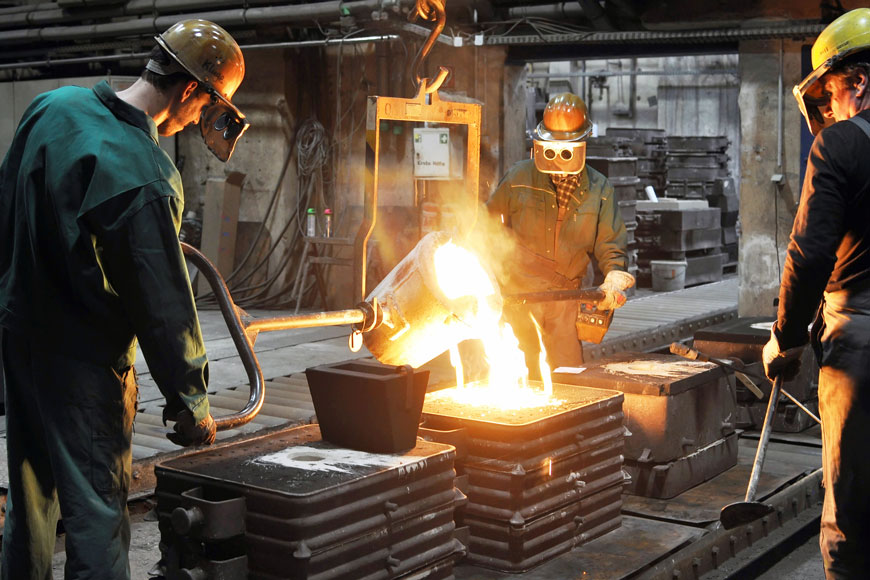
Cost-effectiveness is one more noteworthy benefit; Metal Casting processes can produce huge amounts of get rid of very little material waste, therefore reducing production prices.
The toughness of cast steel elements contributes to the long life of products, reducing the need for regular substitutes. Generally, the benefits of Metal Casting substantially add to performance, sustainability, and innovation within contemporary manufacturing settings.
Developments Driving the Future of Metal Casting
While traditional Metal Casting methods have offered the industry well for years, recent technologies are positioned to revolutionize the field. Developments such as 3D printing innovation permit fast prototyping and the manufacturing of complex geometries that were previously unattainable. These technologies not only improve design versatility however likewise decrease waste and shorten lead times. On top of that, the integration of automation and robotics in casting processes is simplifying procedures, enhancing precision, and enhancing employee security. In addition, the growth of composite products and new alloys is enabling the production of more powerful, lighter spreadings customized for details applications. Digital innovations, including expert system and artificial intelligence, are optimizing casting parameters and predictive maintenance, driving better quality assurance. Jointly, these innovations are pushing the boundaries of Metal Casting, fostering higher performance and sustainability in production, and positioning the industry for future development and competitiveness.
Obstacles and Solutions in Metal Casting Processes
As advancements in Metal Casting technology proceed to improve the industry, various difficulties continue to be that manufacturers must address to completely leverage these advancements. One substantial click to read issue is the irregularity in material properties, which can result in inconsistent high quality and performance. This variability often arises from fluctuations in basic materials and processing problems. Furthermore, the increasing expenses of power and materials present monetary restraints, pressing suppliers to look for extra reliable procedures.
To combat these challenges, business are progressively adopting automated systems and progressed simulation methods to enhance accuracy and consistency. Executing quality assurance steps throughout the production procedure likewise assists in identifying flaws early. Spending in study for alternative products may enhance and decrease prices sustainability. By resolving these challenges with innovative remedies, the Metal Casting industry can improve productivity and keep competitiveness in the evolving production landscape.
Regularly Asked Questions
What Products Are Generally Used in Steel Casting Procedures?
Usual products utilized in Metal Casting procedures include light weight aluminum, bronze, iron, and magnesium. Each product has one-of-a-kind buildings that accommodate different applications, improving the flexibility and functionality of the a knockout post final cast products in numerous industries.
How Do Environmental Laws Impact Metal Casting Procedures?
Ecological guidelines compel Metal Casting procedures to embrace cleaner innovations and methods, usually boosting production prices. Conformity may bring about cutting-edge procedures that decrease waste and emissions, inevitably advertising sustainability within the Metal Casting industry.
What Are the Precaution in Metal Casting Facilities?
Safety measures in Metal Casting centers consist of appropriate ventilation, personal safety equipment, routine security training, tools maintenance, and adherence to security laws, making certain a safe environment for employees while decreasing dangers connected with unsafe materials and procedures.
Just How Is Top quality Controlled in the Metal Casting Process?
Quality assurance in Metal Casting involves rigorous inspections, including aesthetic assessments, dimensional checks, and material testing. Adherence to sector requirements and carrying out quality administration systems guarantees that castings satisfy specific needs throughout the production procedure.
What Is the Future Job Outlook for Metal Casting Professionals?
The future work outlook for Metal Casting experts shows up encouraging, driven by developments in innovation and raising need across various industries (Metal Castings). Growth in automation and lasting techniques will likely create new possibilities in this market
Historically, Metal Casting began with simple methods such as sand spreading and lost-wax casting, which enabled artisans to create detailed forms. Over time, developments in innovation presented processes like die casting and financial investment casting, boosting accuracy and decreasing waste. In enhancement, the clinical area advantages from precision spreadings utilized in surgical instruments over at this website and prosthetics, showing the versatility of Metal Casting throughout diverse applications. Metal Casting provide various advantages that greatly boost contemporary manufacturing processes. Usual materials utilized in Metal Casting procedures consist of aluminum, iron, bronze, and magnesium.
Comments on “The ultimate guide to Metal Castings for manufacturers”